The problem
Lithium mining pumps fresh water from one of the driest basins on Earth. That same water feeds lagoons where endangered flamingos breed and supports Indigenous communities who farm and graze livestock. Lithium production is set to more than double. Can the aquifer take it?
What was done
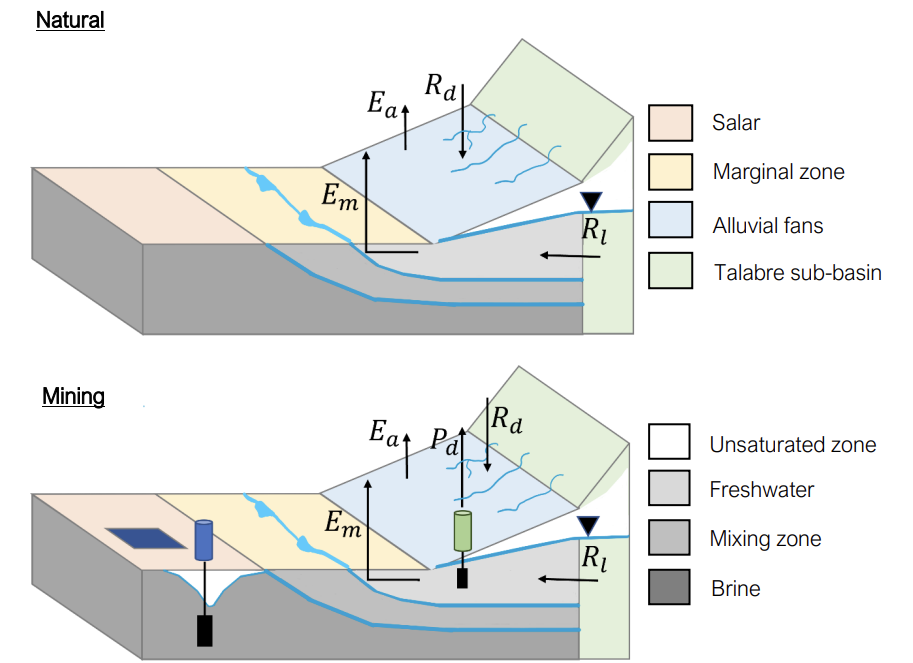
- Built a 45 year groundwater balance for the alluvial fans
- Traced 20 years of monitoring well data to show how pumping moves the water table
- Tested the governance side, looking at who holds water rights, who has a say and how breaches are policed
What was found
16:1Recharge compared with freshwater pumping
13 yrsAverage time for the aquifer to renew
30×More water rights held by mining than by local communities
- The aquifer is resilient. Recharge outpaces pumping 16 to 1. The fans renew in about 13 years and 20 years of pumping moved only 0.16% of the stored water.
- Spikes and droughts are the risk. Sudden jumps in pumping caused drawdowns well above the yearly average. Once pumping steadied, the aquifer took around 10 years to settle. In dry years the wetland water table responded far more sharply.
- Governance is the weak link. Mining companies hold 30 times more water rights than local communities. The law treats water as a market commodity. Monitoring is largely self-reported and no river basin management plan exists.
The result
Freshwater pumping alone is not draining the Atacama. Weak, unequal governance is what undermines sustainability. The recommendations were:
- A basin management plan that gives Indigenous communities a real seat at the table
- Independent monitoring with clear drawdown thresholds that trigger action
- Adaptive management with early warning signs agreed with communities for dry years
- Independent research into the impacts on ecosystems and climate